Buying guide: Surveys
What Does a Surveyor Check When Buying a House? (And What They Don't)
Last updated:
Type the full address with its postcode to go straight to your report options. Try .
- 65+ official sources
- Emailed within 24 hours, usually faster
- Sources and coverage gaps named
- One-off payment, no subscription
What the report looks like inside
See the full sample →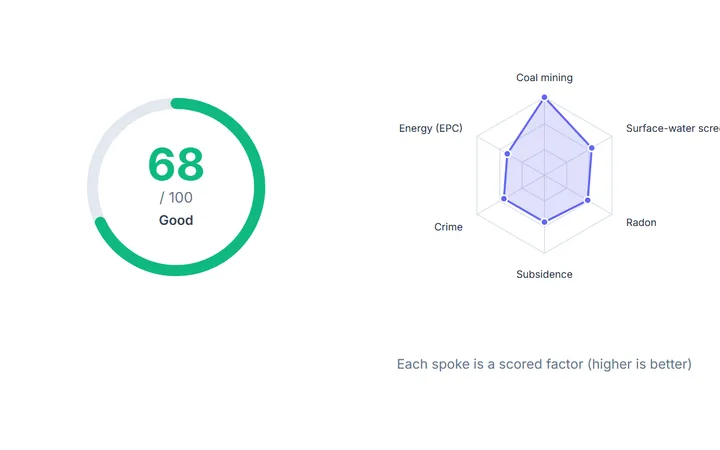 IQ Score and the factors behind it
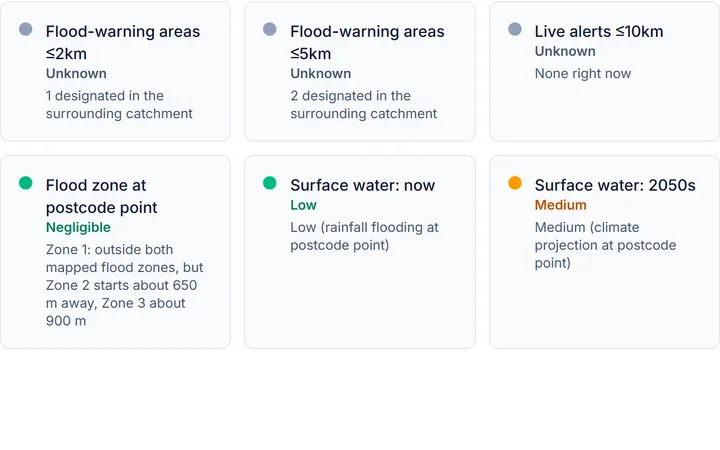 Flood risk at the postcode point
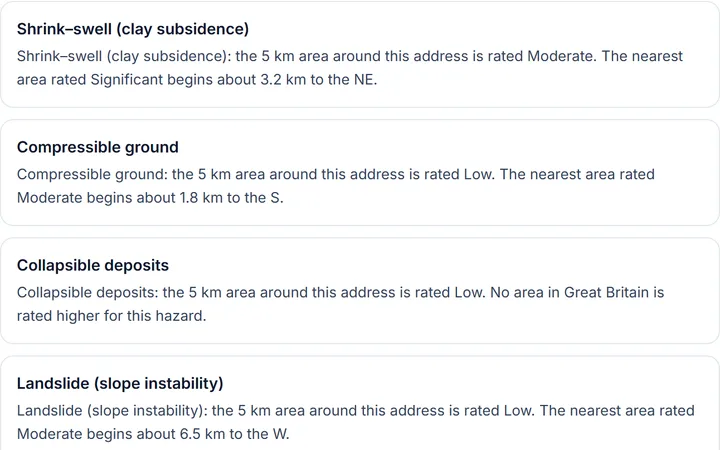 Six ground hazards, rated for the area
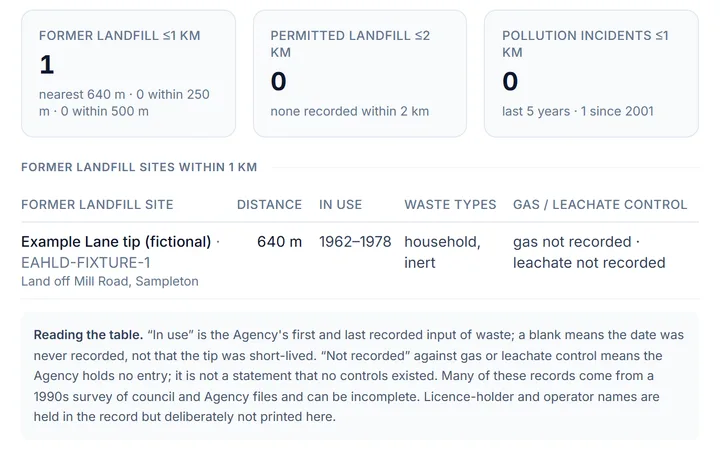 Landfill, permits and incidents nearby
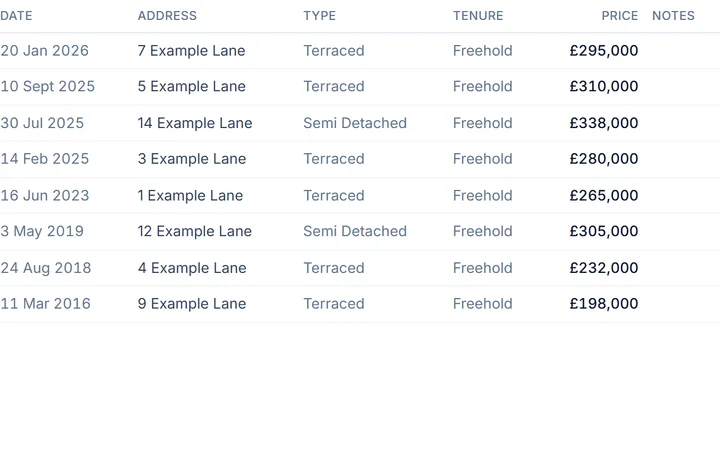 What homes here sold for
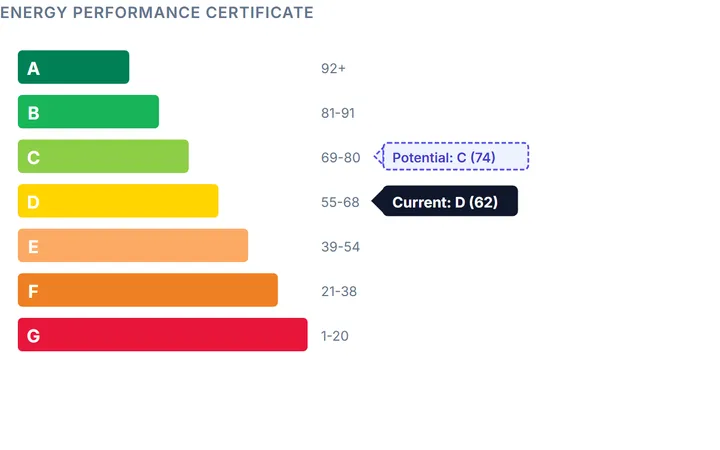 The energy rating, now and after upgrades
Illustrative sample · fictional address · cut from the sample report as it prints
Quick answer
A surveyor checks the visible, accessible condition of a property: the roof, chimneys, walls, windows and doors, damp, timber and any signs of movement, the loft, floors and ceilings, the bathrooms and kitchen, and the visible parts of the electrics, heating and plumbing. They grade defects and their urgency. They do not lift carpets, open up walls, test services, or check off-site records like flood risk, coal mining, planning history or the lease. Those sit outside a physical survey.
What does a surveyor check inside and outside the property?
| Area | What the surveyor looks at |
|---|---|
| Roof & chimneys | Tiles/slates, flashing, ridge, visible sagging, chimney stacks |
| External walls | Cracking, bulging, pointing, render, damp-proof course |
| Windows & doors | Rot, seals, operation, condensation between panes |
| Damp & timber | Rising/penetrating damp readings, signs of rot or infestation |
| Roof space / loft | Structure, insulation, water tanks, signs of leaks (where accessible) |
| Floors & ceilings | Level, cracking, staining, springiness |
| Kitchen & bathrooms | Fittings, sealing, ventilation, visible leaks |
| Services (visible) | Consumer unit, boiler, radiators, visible pipework (noted, not tested) |
| Outside & grounds | Boundaries, drives, drainage gullies, outbuildings, trees near foundations |
What does a surveyor NOT check?
A home survey is a non-intrusive visual inspection. The surveyor won't lift fitted carpets, move heavy furniture, take up floorboards, open walls or ceilings, or test the electrics, gas or drainage; they observe and recommend specialist checks where needed. Crucially, a survey also says nothing about off-site records: flood-risk history, past coal mining, the planning and enforcement history, the lease length and ground rent, or the EPC and its exposure to tightening energy rules. None of those are things a surveyor inspects on the day.
How is that different from a mortgage valuation?
A mortgage valuation is not a survey at all. It's a brief check for the lender that the property is worth what they're lending. It won't flag defects for you. If you want to know the condition of a home, you need a survey (Level 2 or Level 3), not a valuation. See mortgage valuation vs survey and how to pick a level in Level 2 vs Level 3.
Check what a surveyor can't, before you offer
A surveyor inspects the building; they don't check the records that can change your decision. HouseCheckup runs 15+ checks on the exact address (flood risk, coal mining, ground stability, planning, EPC, crime and more) from official sources, before you commit to an offer or a survey fee. £24.99 (Complete), one-off.
Type the full address with its postcode to go straight to your report options. Try .
£24.99 one-off · no subscription · hand-checked by a person and emailed within 24 hours, usually faster.
Cancel for a full refund at any time before your report is emailed. Terms
Sources
- RICS Home Survey Standard: scope of a home survey, Royal Institution of Chartered Surveyors (RICS)
- What does a house survey check?, HomeOwners Alliance
How HouseCheckup works
From search to full report in three simple steps.
- England, Wales & Scotland
Search any address
Enter an address in England, Wales and Scotland. Coverage varies by nation and source.
- Before you pay
See the IQ Score
See an initial area risk screen where enough data is available, with the checks and coverage behind the score.
- Emailed within 24 hours
Get the full report
Choose Lite (£9.99) or Complete (£24.99). The report is emailed to you within 24 hours, usually faster, with every source named and any check it could not run stated.
Frequently asked questions
What does a surveyor check when buying a house?
What does a surveyor not check?
Does a surveyor check the electrics and plumbing?
Does a survey check for damp?
Still have a question? We typically respond within 24 hours.
Ready to check a property?
Enter the address you are thinking of buying. See the available area risk data, then choose an emailed report for the property.
Type the full address with its postcode to go straight to your report options. Try .
Reports from £9.99, one-off. Compare Lite and Complete
Cancel for a full refund at any time before your report is emailed. Terms
At a glance
One-off
No subscription
Pay once for each report you buy.
Named
Sources & coverage
Every report names its sources and the checks it could not run.
GB
England, Wales & Scotland
Coverage varies by nation and source, and is stated.
£9.99
Reports from
Lite £9.99, Complete £24.99.