What causes subsidence in UK property?+−
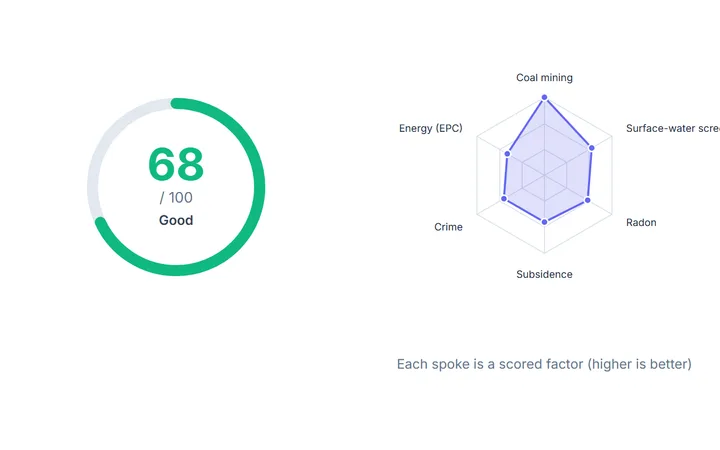
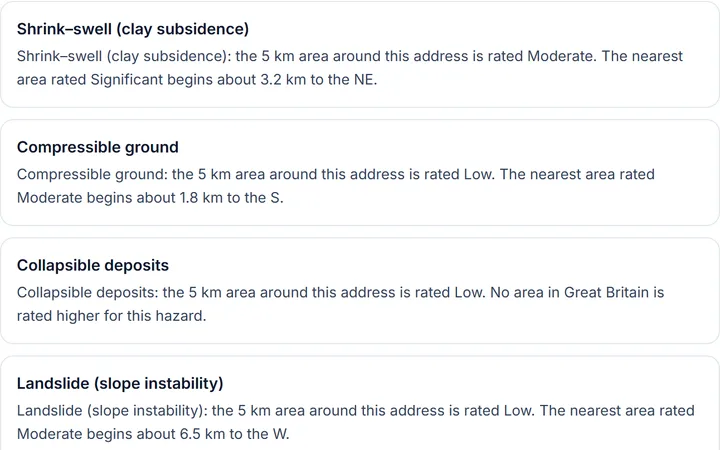
Six main mechanisms: clay shrink-swell (most common in London/South-East, where clay-rich soils expand when wet and contract when dry, particularly near tree roots); mining-related subsidence in former coalfields (Yorkshire, Northumberland, South Wales); soluble-rock dissolution (chalk, limestone, gypsum); compressible deposits (peat, soft alluvium); landslide-prone slopes; and running sand. BGS GeoSure maps each separately.
Will my mortgage lender refuse a property with subsidence history?+−
Depends. Past, fully-remediated and monitored subsidence is often acceptable; active or unresolved movement typically isn't. Lenders may require a specialist structural-engineer's report (£500–£1,500) before lending. A property with documented historic claims may also face insurance loadings or limited insurer panels. HouseCheckup reports available screening records and coverage gaps; it does not provide a legal opinion, inspection, investment model or guarantee that a risk is absent.
Are clay-soil London properties higher subsidence risk?+−
Yes, statistically: ABI claims data concentrates in the London/South-East clay belts. Particular risk where mature trees (especially oak, willow, poplar) sit within 10–15m of the property. HouseCheckup reports available screening records and coverage gaps; it does not provide a legal opinion, inspection, investment model or guarantee that a risk is absent.
How do Nottingham's sandstone caves affect subsidence risk?+−
Over 800 mapped caves underlie central Nottingham (mostly Sherwood Sandstone-cut). Most are stable, but some properties sit above unmapped voids or stress-fractured zones. HouseCheckup reports available screening records and coverage gaps; it does not provide a legal opinion, inspection, investment model or guarantee that a risk is absent. If flagged, a ground-survey is the formal follow-up.
Does subsidence insurance always pay out for repairs?+−
Generally yes for active, accepted claims, but only after the insurer's own loss-adjuster confirms the cause. Typical excesses are £1,000–£2,500 on subsidence claims (vs ~£100 on standard claims). HouseCheckup reports available screening records and coverage gaps; it does not provide a legal opinion, inspection, investment model or guarantee that a risk is absent.
What is included in a HouseCheckup report?+−
Available public records assembled for one property and reviewed by a person, with findings and coverage gaps emailed to the buyer. Sources and location resolution vary by topic and nation. This is screening, not a building inspection, formal valuation, legal opinion or official conveyancing search.
Do I need a paid report before offering?+−
Use free information first. A paid screening report is optional and useful only if it answers an information gap. It does not replace a survey or the official searches your conveyancer recommends.
Is this an independent ranking?+−
HouseCheckup publishes this guide and sells one of the services discussed. Entries are ordered to explain different buying uses, not by an independently measured quality score. Prices and stated contents were checked against the linked public offers on 5 September 2026; we did not purchase every competing report or test its accuracy. Confirm the selected product, VAT, access limits and renewal terms before paying.