Comparison guide
Listed building survey vs a property report
Last updated:
Type the full address with its postcode to go straight to your report options. Try .
- 65+ official sources
- Emailed within 24 hours, usually faster
- Sources and coverage gaps named
- One-off payment, no subscription
What the report looks like inside
See the full sample →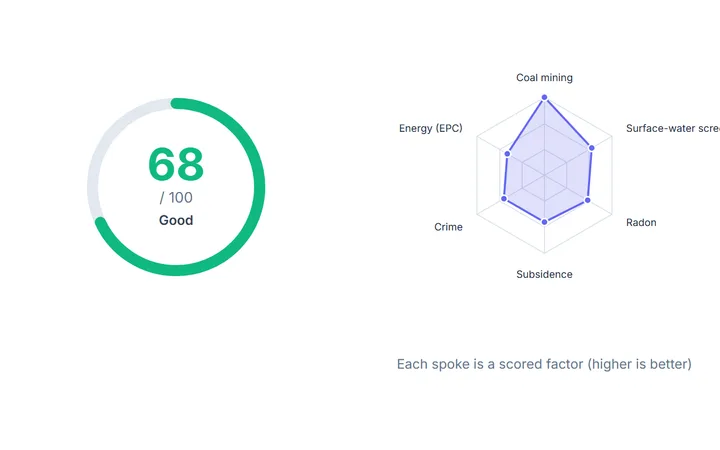 IQ Score and the factors behind it
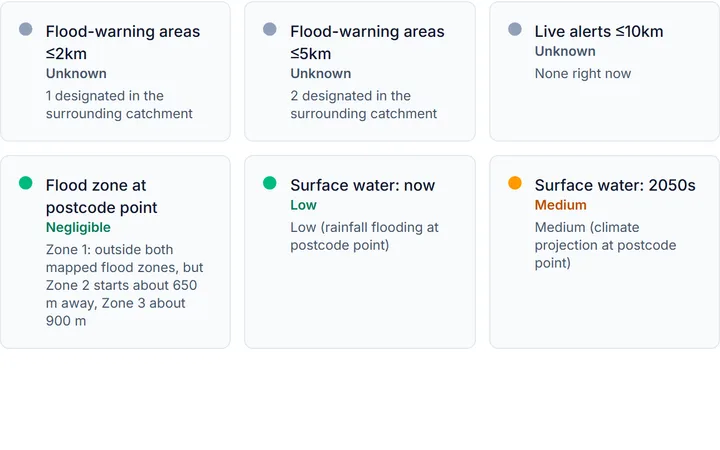 Flood risk at the postcode point
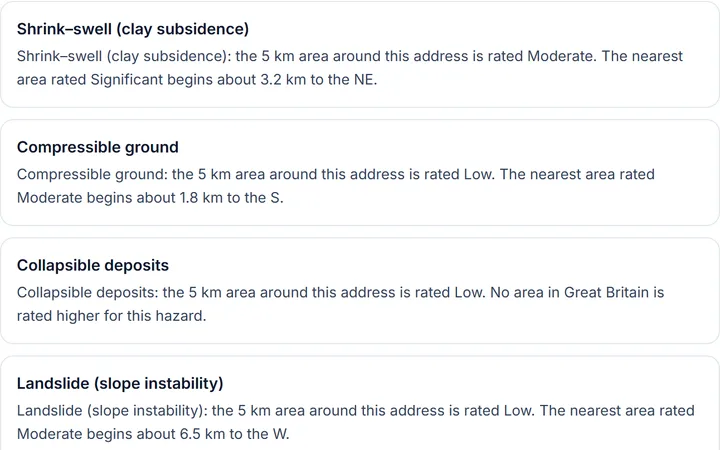 Six ground hazards, rated for the area
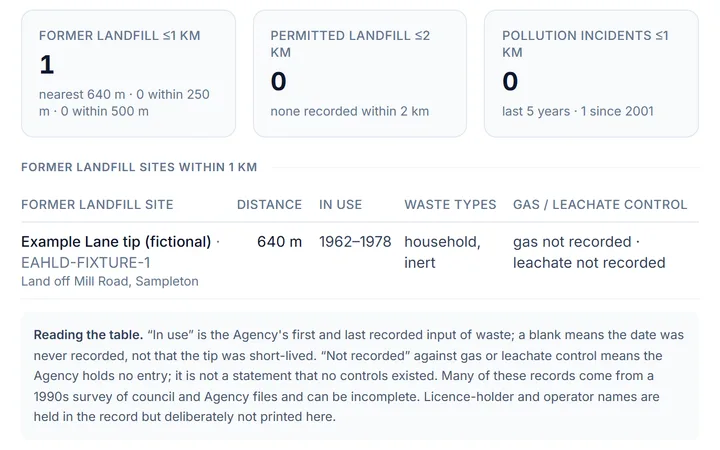 Landfill, permits and incidents nearby
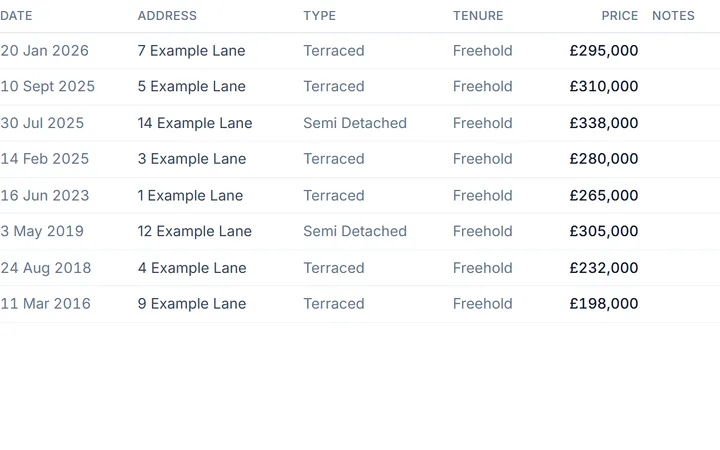 What homes here sold for
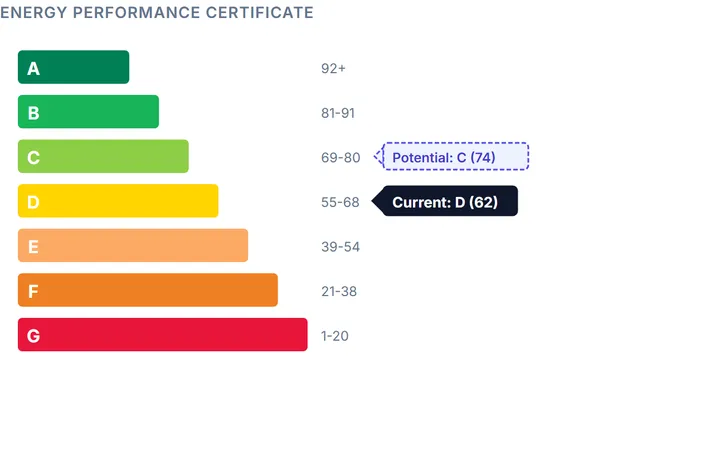 The energy rating, now and after upgrades
Illustrative sample · fictional address · cut from the sample report as it prints
Quick answer
A listed home needs two things checked: the building and its paperwork. For the building, commission a detailed survey (RICS Level 3), ideally from a surveyor with historic-building expertise. For the paperwork, confirm consent for past alterations: under the Planning (Listed Buildings and Conservation Areas) Act 1990, works affecting a listed building's character need listed building consent, doing them without it is a criminal offence, and an enforcement notice is served on the owner with no time limit in the Act. A pre-offer report confirms the designations and screens flood and ground risk.
| Dimension | Pre-offer property report | Listed building survey (RICS Level 3) |
|---|---|---|
| Question it answers | Is the address listed or in a conservation area, and what risks surround it? | What condition is this historic building in, and what will it need? |
| When | Before you offer | After the offer is accepted |
| Heritage designations | Complete checks them at the address (England and Scotland) | Assumed known; the surveyor works within them |
| Condition of the fabric | Not covered: a desk report never visits | Yes, a detailed inspection |
| Past alterations and consent | Not covered; ask the seller and your conveyancer | May spot alterations; consent is a legal question for your conveyancer |
| Flood, ground and mining | Yes, screened from national datasets | Not a geological screen; may note visible movement |
| Cost | £9.99 Lite / £24.99 Complete | Quoted per property; see our Level 3 cost guide |
Our verdict
On a listed home the survey and the consent history matter more than on almost any other purchase, because the building's problems and its unauthorised alterations both pass to you. Confirm the designations and screen the location before you offer; commission a conservation-literate surveyor once the offer is accepted; and do not exchange until every alteration has a consent or a convincing answer.
Confirm the designations before you offer
£24.99 Complete includes heritage and planning designations for the address. Emailed within 24 hours, usually faster.
Type the full address with its postcode to go straight to your report options. Try .
£24.99 one-off · no subscription · Human-checked and emailed to you. See a sample report · Review report options and coverage
Cancel for a full refund at any time before your report is emailed. Terms
What listing means for a buyer
Section 7 of the Planning (Listed Buildings and Conservation Areas) Act 1990, which applies in England and Wales, is short and strict: no one may carry out works for the demolition of a listed building, “or for its alteration or extension in any manner which would affect its character as a building of special architectural or historic interest,” unless the works are authorised. Scotland has its own listed buildings legislation. The test is the effect on the building's character, so it is not confined to the outside.
Section 9 makes contravening section 7 an offence, punishable on indictment by up to two years' imprisonment, a fine or both. Section 38 lets the planning authority issue a listed building enforcement notice requiring the building to be restored, and a copy is served on the owner and the occupier. The section sets no time limit for issuing it. Put together, that is the point every buyer of a listed home needs to grasp: unauthorised work by a previous owner can become your problem.
The consent check
Before you exchange, list every alteration you can see or the seller describes (new windows, removed walls, a modern kitchen or bathroom in an old room, an extension, a loft conversion) and ask for the listed building consent behind each one. Your conveyancer's local search will show listed status and planning history held by the council, and listed buildings are registered as local land charges, but matching the consents to the work on the ground is something you and your surveyor have to do. Where consent cannot be shown, take advice before you commit; the cost of reversing unauthorised work on a listed building can be substantial.
Choosing the survey
A listed building is exactly the kind of property a RICS Level 3 survey is for: older, often altered and built with traditional materials. RICS also runs a Building Conservation Accreditation Scheme, established in 1992 “to provide a recognised qualification for individuals specialising in conservation of scheduled monuments, listed and historic buildings or sites.” A surveyor with that background should recognise traditional construction and inappropriate past repairs, and advise within the constraints listing imposes. Our report-vs-survey guide explains the survey levels.
Where a property report fits
A pre-offer property report does not inspect the building and does not establish whether past work had consent. What it does before you offer is confirm the designations at the address and screen the risks around it. £24.99 Complete includes heritage and planning designations (whether the address is listed and whether it sits in a conservation area) for English and Scottish properties. Conservation areas and listed buildings. These come from planning.data.gov.uk, which collects from English authorities only. Welsh designations sit with Cadw. Both tiers screen flood risk, ground stability, radon and coal mining for the address, which matter as much for an old building as a new one. It is the first check, not the last.
Screen the address first
From £9.99. Flood, ground stability, radon and coal mining for the address; Complete adds designations.
Type the full address with its postcode to go straight to your report options. Try .
£24.99 one-off · no subscription · Human-checked and emailed to you. See a sample report · Review report options and coverage
Sources
- Planning (Listed Buildings and Conservation Areas) Act 1990, section 7, legislation.gov.uk
- Planning (Listed Buildings and Conservation Areas) Act 1990, section 9, legislation.gov.uk
- Planning (Listed Buildings and Conservation Areas) Act 1990, section 38, legislation.gov.uk
- Building Conservation Accreditation Scheme: applicant guide, RICS
How HouseCheckup works
From search to full report in three simple steps.
- England, Wales & Scotland
Search any address
Enter an address in England, Wales and Scotland. Coverage varies by nation and source.
- Before you pay
See the IQ Score
See an initial area risk screen where enough data is available, with the checks and coverage behind the score.
- Emailed within 24 hours
Get the full report
Choose Lite (£9.99) or Complete (£24.99). The report is emailed to you within 24 hours, usually faster, with every source named and any check it could not run stated.
Frequently asked questions
What survey do I need for a listed building?
Do I need listed building consent to make changes?
Can I be responsible for work a previous owner did without consent?
How do I find out whether a house is listed?
Is a conservation area the same as a listed building?
How much does a listed building survey cost?
Still have a question? We typically respond within 24 hours.
Ready to check a property?
Enter the address you are thinking of buying. See the available area risk data, then choose an emailed report for the property.
Type the full address with its postcode to go straight to your report options. Try .
Reports from £9.99, one-off. Compare Lite and Complete
Cancel for a full refund at any time before your report is emailed. Terms
At a glance
One-off
No subscription
Pay once for each report you buy.
Named
Sources & coverage
Every report names its sources and the checks it could not run.
GB
England, Wales & Scotland
Coverage varies by nation and source, and is stated.
£9.99
Reports from
Lite £9.99, Complete £24.99.