Independent ranking — no paid placements

Leasehold vs Freehold Explained: The Difference, Costs and Risks for UK Buyers

Last updated:

Quick answer

Freehold means you own the property and the land it sits on outright, with no time limit and no landlord. Leasehold means you own the right to live in the property for a fixed number of years (the lease term) but not the land — a freeholder owns that, and you typically pay ground rent and service charges. Houses are usually freehold; flats are usually leasehold. The biggest leasehold risks are a short lease (under ~80 years gets expensive to extend), escalating ground rent, and uncontrolled service charges. Share of freehold and commonhold are ownership structures that remove the landlord problem.

The 2026 ranking

#ServicePriceEntry tierCoverageBest forLink
1FreeholdNo ground rent, no leaseYou own the building and the land outright, foreverHouses; buyers who want full control and no landlordVisit
2Share of freeholdService charge; usually nominal/peppercorn ground rentYou own a long lease plus a share of the freehold companyFlat buyers who want control without buying the whole buildingVisit
3CommonholdCommonhold assessment (shared running costs)Freehold ownership of a flat with no lease and no landlordFlat buyers wanting freehold-style ownership (still rare in 2026)Visit
4LeaseholdGround rent + service charge (varies)You own the right to occupy for a fixed term; a freeholder owns the landMost flats; check lease length, ground rent and charges firstVisit

How we ranked these

We compared the four ways UK residential property is owned — freehold, leasehold, share of freehold and commonhold — on who owns the land, whether there is a time limit, ongoing charges (ground rent, service charges), control over the building, and resale/mortgageability risk. Facts are grounded in HM Land Registry guidance, the Leasehold Reform (Ground Rent) Act 2022, the Leasehold and Freehold Reform Act 2024, and the government's LEASE advisory service. No product placement in the ranking.

Detailed reviews

#1

Freehold

No ground rent, no lease

Freehold is outright ownership of both the building and the land it stands on, with no time limit. There is no landlord, no ground rent and no lease to extend. You are responsible for all maintenance, but you control it. The overwhelming majority of houses in England and Wales are sold freehold; if you are offered a leasehold house, treat that as a red flag worth investigating before you offer.

Pros

  • No lease term — you own it indefinitely
  • No ground rent and no freeholder to answer to
  • Full control over alterations and maintenance
  • Generally the most mortgageable and resaleable tenure

Cons

  • You bear 100% of maintenance and buildings insurance costs
  • For flats, pure freehold is rare because of shared structure and access
#2

Share of freehold

Service charge; usually nominal/peppercorn ground rent

Share of freehold means you hold a leasehold flat but also own a share of the freehold of the building (usually via a management company the leaseholders jointly control). It combines the practicality of a lease for a flat with collective control of the land — so the leaseholders can extend their own leases cheaply (often to 999 years) and set a peppercorn ground rent. It is widely seen as the best-value structure for a flat, though it depends on the other owners co-operating.

Pros

  • Leaseholders collectively control the building and charges
  • Leases can be extended cheaply, often to 999 years
  • Ground rent can be reduced to a peppercorn (effectively nil)

Cons

  • Requires co-operation with the other flat owners
  • You share responsibility for managing and insuring the building
#3

Commonhold

Commonhold assessment (shared running costs)

Commonhold lets you own a flat freehold, with no lease and no landlord — common parts are owned and managed by a commonhold association the flat owners run. Introduced in 2002, it remains rare in practice. The Leasehold and Freehold Reform Act 2024 and subsequent government reform plans aim to make commonhold the default tenure for new flats over time, but the vast majority of flats are still leasehold in 2026.

Pros

  • No lease term and no ground rent
  • Flat owners collectively own and run the building
  • Government's stated long-term direction of travel for flats

Cons

  • Still very rare — few mortgage lenders have deep commonhold experience
  • Reforms to expand it are mid-implementation, not complete
#4

Leasehold

Ground rent + service charge (varies)

Leasehold means you own the property for the length of the lease (commonly 99, 125 or 999 years from when it was granted) but not the land. A freeholder retains ownership of the land and building structure, and you usually pay ground rent and service charges. The key risks are: a short remaining lease (below ~80 years extension becomes much more expensive because of 'marriage value'); escalating ground rent; and service charges you do not control. Always check the remaining lease term and the ground-rent clause before you offer — both are revealed in the title and lease documents.

Pros

  • Standard, well-understood structure for flats
  • Freeholder/managing agent handles building maintenance and insurance
  • Statutory rights to extend the lease and to challenge unreasonable charges

Cons

  • Lease is a wasting asset — short leases lose value and get costly to extend
  • Ground rent and service charges can rise; some older leases have onerous doubling clauses
  • Less control; you need freeholder consent for major alterations

Verdict

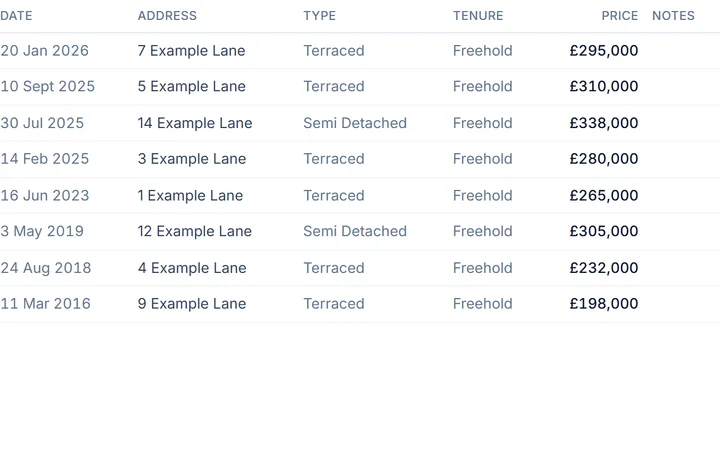
If you can buy freehold — as you usually can with a house — do; it is the cleanest, most controllable and most resaleable tenure. For a flat, leasehold is the norm, and it is fine provided you check three things before you offer: the remaining lease term (be cautious below 90 years and treat under 80 years as a price-affecting issue), the ground-rent clause (avoid onerous doubling clauses; thanks to the 2022 Act new long residential leases now carry only a peppercorn rent), and the service-charge history. A flat with share of freehold is usually the best-value option of all. Whatever the tenure, run an instant HouseCheckup Snapshot on the address first — it surfaces the sold-price history and the risk data you want on the table before you commit (the £7 HMLR title register is the source for tenure and ownership).

Frequently asked questions

Freehold means you own the building and the land outright with no time limit and no landlord. Leasehold means you own the property only for the length of the lease (e.g. 99, 125 or 999 years) and not the land — a freeholder owns that, and you usually pay ground rent and service charges. Houses are typically freehold; flats are typically leasehold.
Freehold is generally better where it is available, because you own the land outright with no lease to extend, no ground rent and full control. Leasehold is normal and acceptable for flats, but you should check the lease length, ground rent and service charges first. Share of freehold — a leasehold flat where the owners also collectively own the freehold — is often the best-value structure for a flat.
If a lease runs all the way out, ownership of the property reverts to the freeholder — but in practice that almost never happens, because leaseholders have a statutory right to extend the lease. The problem is cost: once the remaining term drops below about 80 years, extension becomes significantly more expensive because of 'marriage value', and below roughly 80 years many lenders are reluctant to lend. Extend before the lease gets short.
As a rule of thumb, be cautious about any lease with under 90 years remaining and treat under 80 years as a material issue, because at 80 years 'marriage value' kicks in and pushes up the extension premium. Many mortgage lenders also require a minimum number of years left at the end of the mortgage term. You can estimate the cost of extending with a lease-extension calculator before you offer.
Yes, though it is unusual and worth scrutinising. Leasehold houses became controversial because of onerous ground-rent terms, and the government has acted to curb the practice. The Leasehold Reform (Ground Rent) Act 2022 ended ground rent on most new long residential leases, and the Leasehold and Freehold Reform Act 2024 further restricts the sale of new leasehold houses. If you are offered a leasehold house, check the ground-rent clause and how to buy the freehold before proceeding.
Share of freehold means you own a leasehold flat and also own a share of the freehold of the building, usually through a company the leaseholders jointly control. It gives flat owners collective control of the building, the ability to extend their own leases cheaply (often to 999 years) and to set a peppercorn ground rent — which is why it is widely regarded as the best-value way to own a flat.

Related guides

Sources